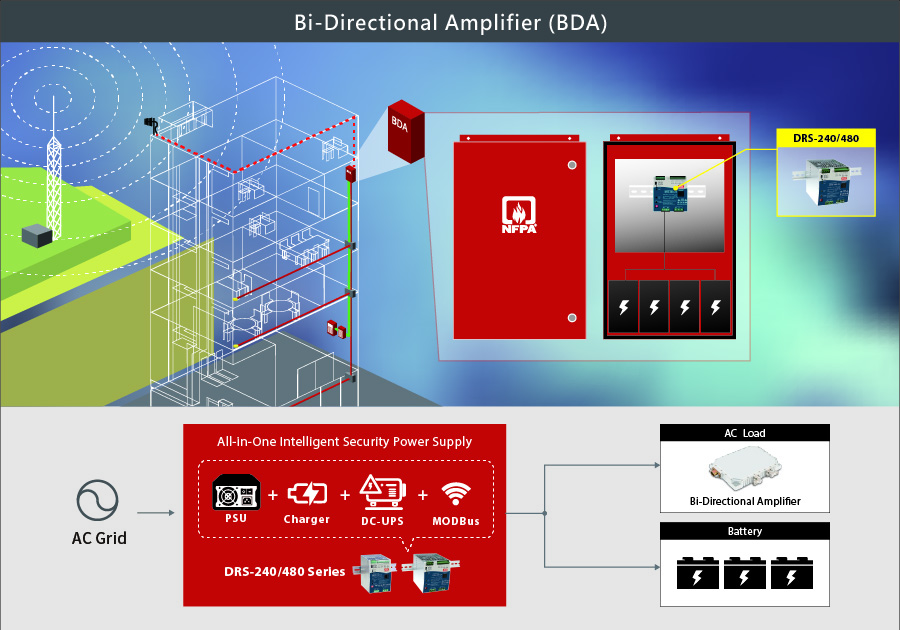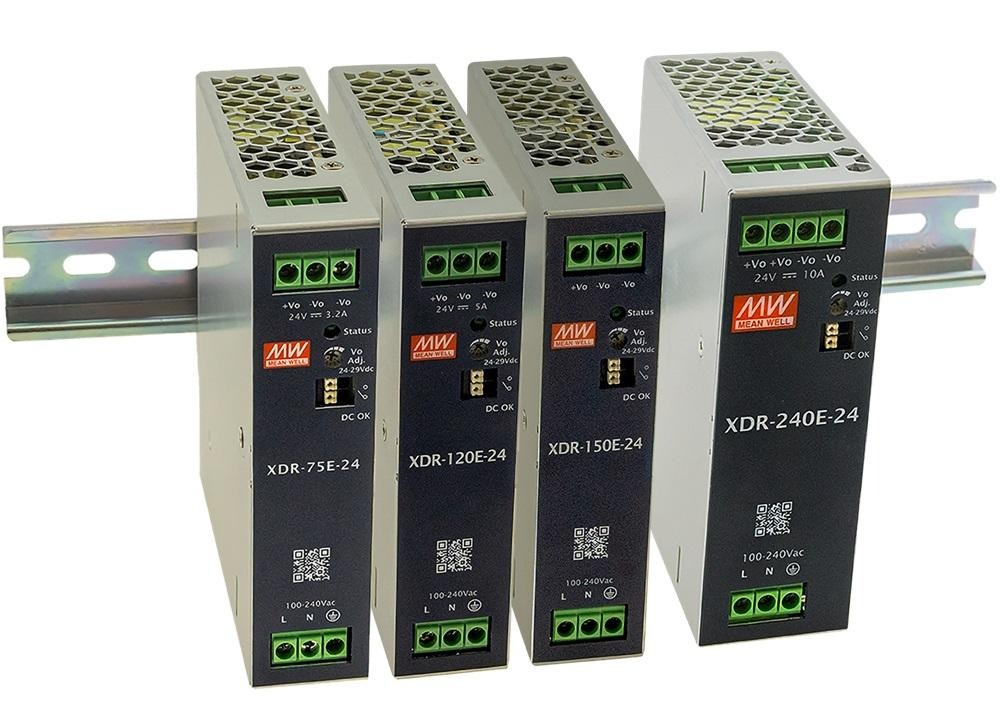


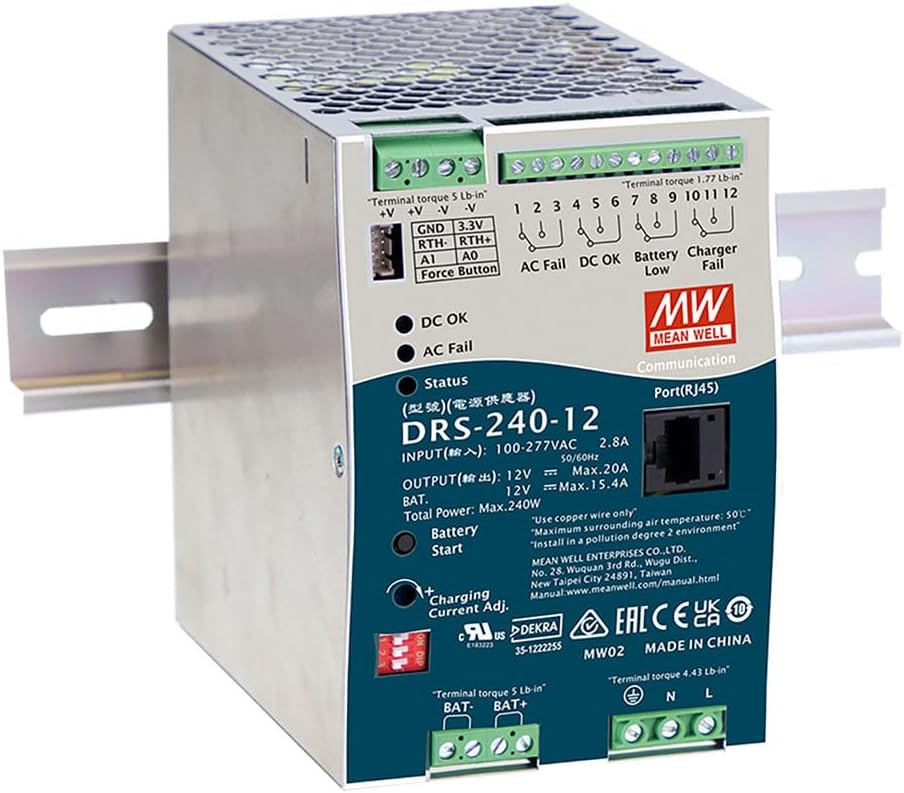
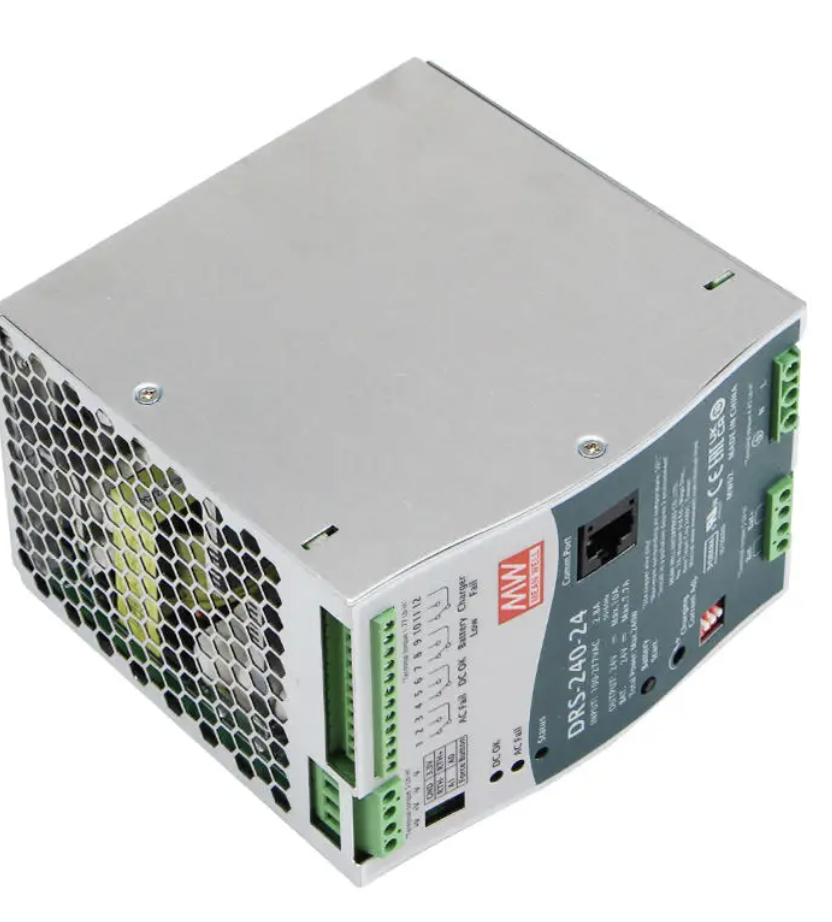
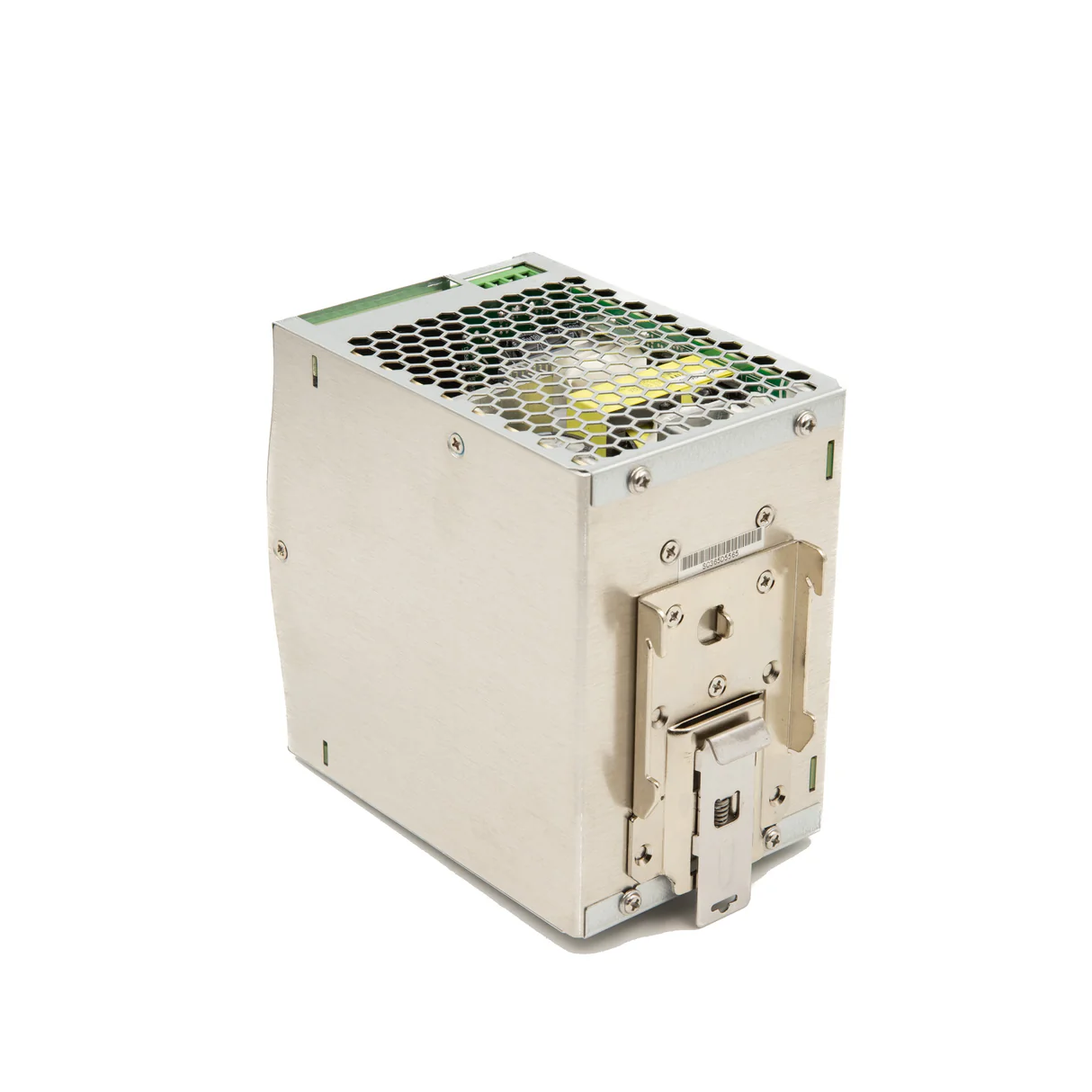
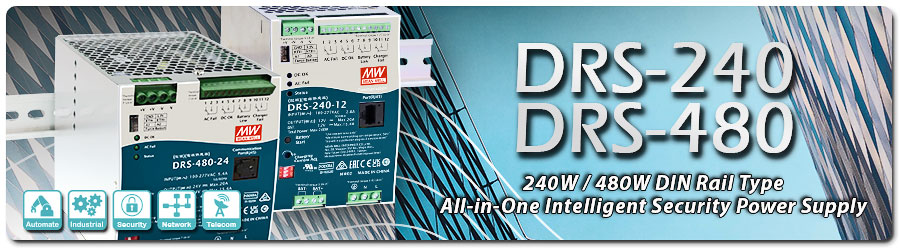
MEAN WELL has continuously released 10~960W DIN rail power supplies and accessories since year 2000. The product line is now quite complete and has gained significant market share. As a response to the rapid development of complex building architectures, governments of Europe, USA and China announced safety regulations for security and fire system (EN54-4/ UL2524/ GB17945). To satisfy the vast market, MEAN WELL announced new DIN rail type all in one intelligent security power supply DRS-240 and DRS-480 series.
The most attractive feature of DRS-240/480 is the multi-functional integration, which includes AC-DC power supply, battery charger, DC-UPS and communication monitor in a single compact package. Other outstanding features include 90~305Vac input applicable to all parts of the world, compliance with safety control regulations and alarm signals, and automatic load priority power balancing (the battery will be charged with excess power). Additionally, the product has built-in MODBus communication interface, and charging parameters can be adjusted via SBP-001. The 2-stage/3-stage charging curve and charging current setting (20%~100%) can also be adjusted manually through the front panel. The charging parameter flexibility allows the DRS-240/ 480 to be suitable for variety of lead-acid and lithium batteries.
All these integrations enable the DRS-240/ 480 to become one of the most complete DIN rail PSU for security and fire system. DRS-240/ 480 provide the best solution for fire safety system such as emergency communication equipment, fire emergency lighting, access control system, central monitoring system…etc.
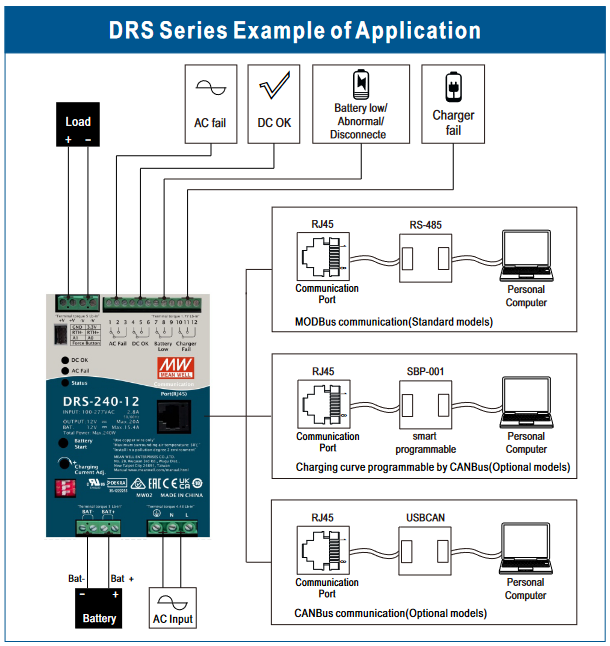
DRS-240 Series: Example of Application and Communication Integration
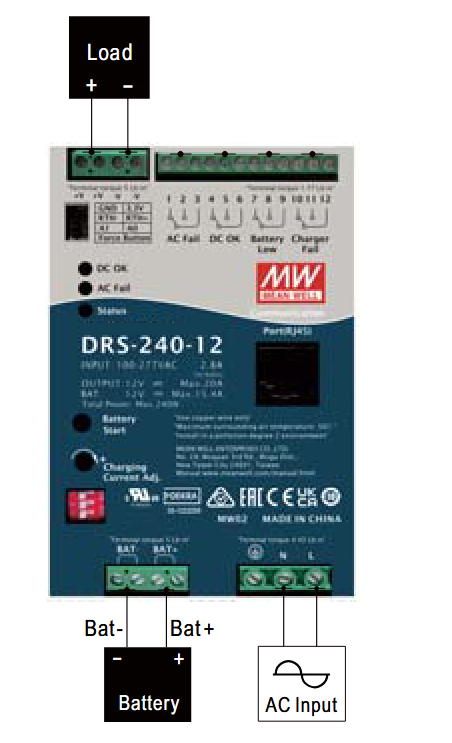
The MEAN WELL DRS-240 Series is an all-in-one AC/DC power solution with a built-in charger and DC-UPS functionality, designed specifically for security, telecom, and industrial backup systems. The application example shown demonstrates how the DRS-240 integrates power, battery, and smart communication in a single system.
Core System Overview
At the heart of the system is the DRS-240-12 power supply. It performs the following roles:
AC/DC Conversion: Converts AC input to regulated DC output.
Battery Charging: Charges a connected battery bank.
UPS Function: Instantly switches to battery backup on AC failure.
Status Monitoring: Outputs relay alarms for AC Fail, Battery Low, DC OK, and Charger Fail.
Power Flow
AC Input: Connected to the terminals on the lower right of the unit.
Battery Bank: Connected to BAT+ and BAT– terminals for charging and backup supply.
Load Output: Power is delivered to the system load via LOAD+ and LOAD–.
Smart Communication Options
The DRS-240 series supports a range of communication protocols for monitoring and control. These are accessed via the RJ45 communication port on the device and split into two categories:
MODBus Communication (Standard Models)
Port: RJ45
Interface: RS-485
Use Case: Allows standard DRS-240 models to communicate with SCADA systems, PLCs, or PCs.
Functionality:
Monitor charging status
Battery voltage
Temperature (if enabled)
System alarms (AC Fail, DC OK, etc.)
Connect the RJ45 port → RS-485 converter → PC running monitoring software.
CANBus Communication (Optional Models)
Port: RJ45
Interface: CANBus
Use Case: More advanced communication for integration with CAN-based control systems.
Tools:
USB to CAN adapter for PC connection
SBP-001 Smart Programmer for curve customization
CANBus allows dynamic charging control, remote diagnostics, and firmware-level adjustments.
SBP-001 Programmer (for CANBus Models Only)
Purpose: Adjust the charging profile for different battery chemistries like:
Lead-acid (AGM, Gel, Flooded)
Lithium (LiFePO4, LMO)
Customization:
Constant current (CC)
Boost and float voltages
Taper thresholds
Connect: RJ45 → SBP-001 → USB → PC with MEAN WELL software.
Relay Alarm Signals
The DRS-240 also provides dry contact relay outputs to integrate into alarm or control systems:
| Signal | Description |
|---|---|
| AC Fail | Input voltage is lost or below threshold |
| DC OK | Output voltage is within normal range |
| Battery Low | Battery voltage drops below safe limit |
| Charger Fail | Charging circuit malfunction or overload |