Optimized Data Center and AI Infrastructure Performance
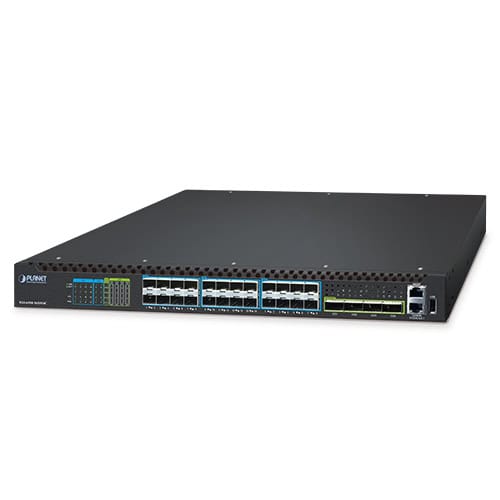
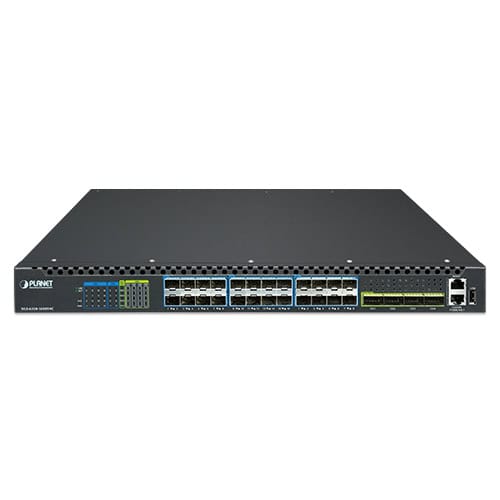
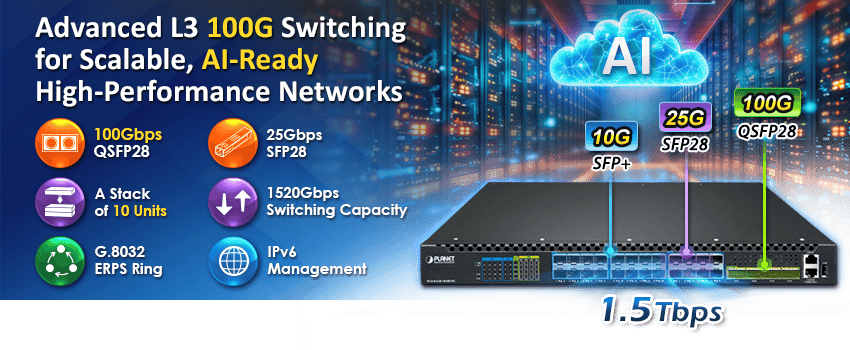
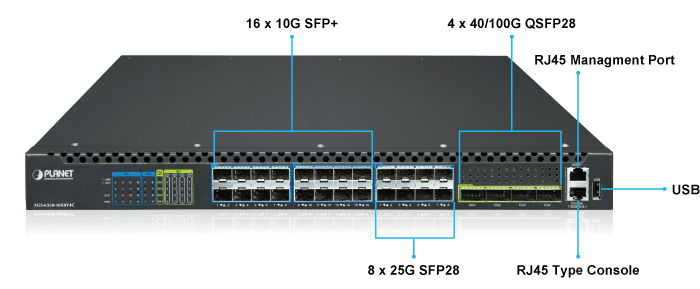
PLANET XGS-6350-16X8Y4C is a high-performance Layer 3 Managed Switch designed for the next-generation Metro, Data Center, AI Computing and Enterprise network requirements. It features high-density 40G/100GbE QSFP28, 25G SFP28 and 10G SFP+ fiber interfaces in a compact 1RU chassis, delivering scalable and ultra-high-speed connectivity for AI workloads and cloud applications.
Layer 3 Routing and Multicast Support
The XGS-6350-16X8Y4C provides comprehensive Layer 3 managed features to streamline service deployment across both traditional L2 networks and fully virtualized data centers. With advanced routing capabilities—including Static Routing, RIP/OSPF, DHCP Relay, BGP, and multicast routing protocols such as PIM-DM/SM—this switch delivers high-performance and scalable network operations for next-generation infrastructures.
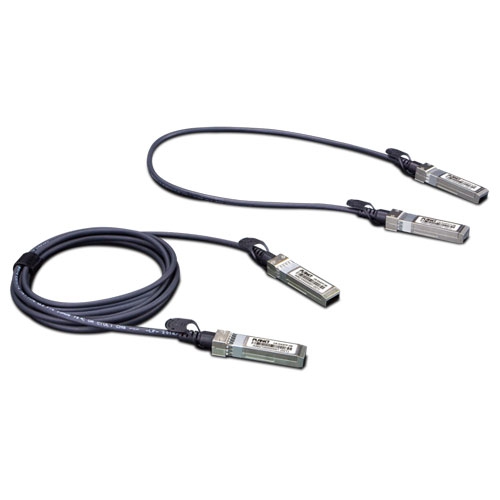
Adaptive 10G/25G/40G/100G Transceivers for AI and High-Performance Networks
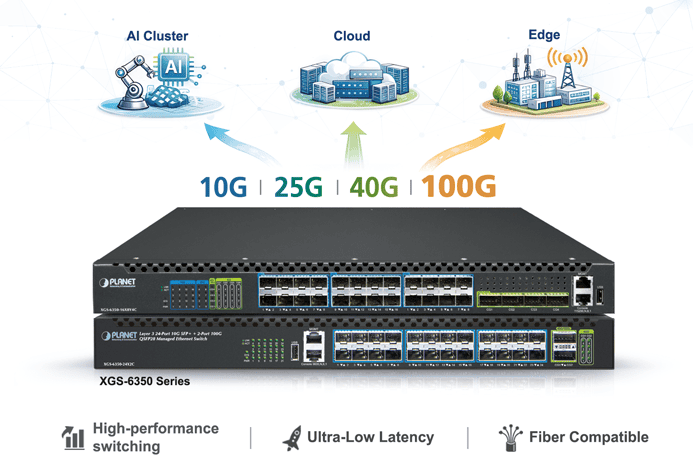
The administrator can flexibly choose the appropriate transceivers based on the required transmission speed or distance, enabling efficient expansion of 10G/25G/40G/100G networks for modern AI, cloud, and high-performance computing workloads. In addition, with a switching capacity of 1520Gbps, the XGS-6350-16X8Y4C can reliably handle massive data flows in secure and scalable topologies, making it ideal for backbone connections or high-capacity servers running AI inference, real-time analytics, video streaming, and multicast applications.
Extractive Power Supply Design to Increase Flexibility
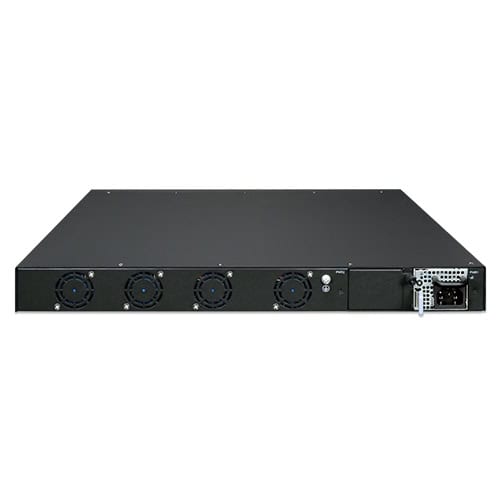
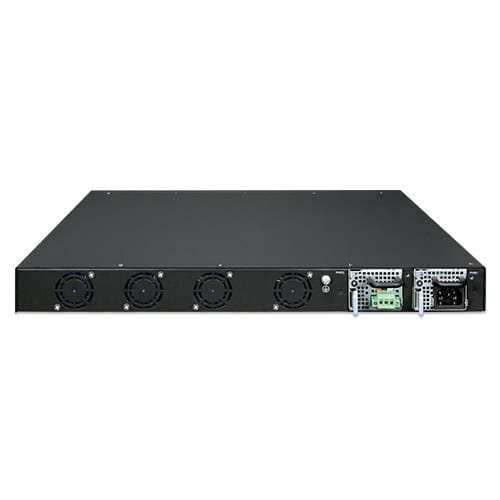
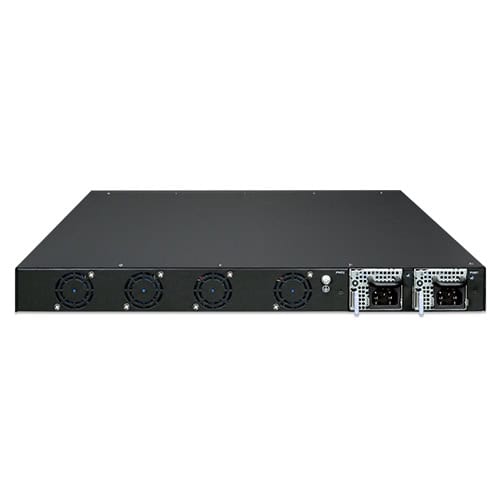
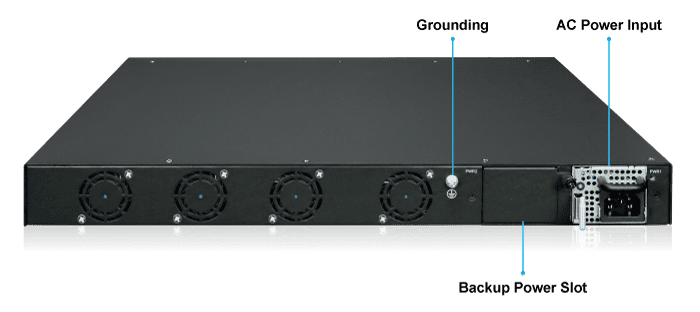
The XGS-6350-16X8Y4C is equipped with one extractive 100~240V AC power supply unit, so it is easy to replace the power for users. Besides, the XGS-6350-16X8Y4C reserves another backup power slot on the rear panel and users can add the second AC or DC power to the redundant power supply installation. The AC power or DC power is optional. The redundant power system is specifically designed to handle the demands of high-tech facilities requiring the highest power integrity.
High Performance
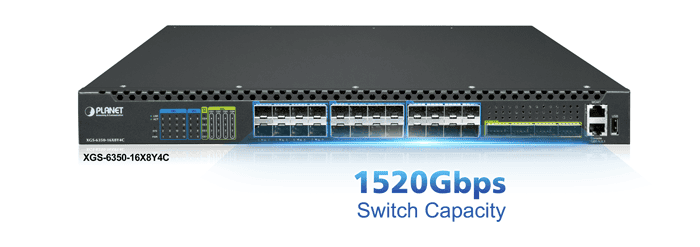
The XGS-6350-16X8Y4C boasts a high-performance switch architecture that is capable of providing non-blocking switch capacity as high as 1520Gbps, which greatly simplifies the tasks of upgrading the LAN for catering to increasing bandwidth demands.
Rich Multi-layer Networking Protocols
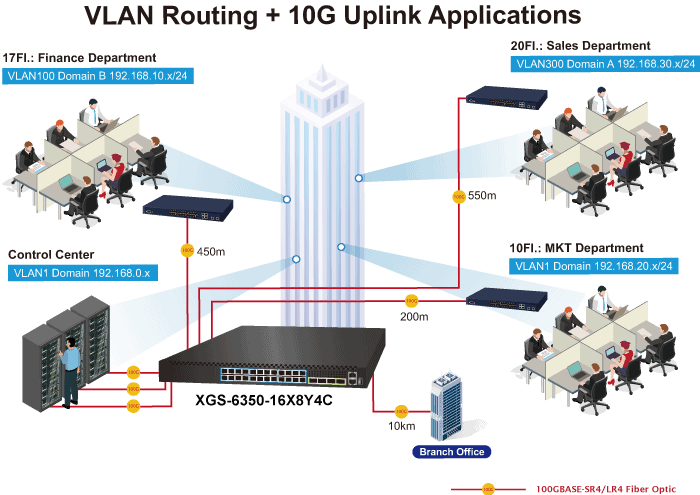
The XGS-6350-16X8Y4C comes with the complete Layer 3 managed function with comprehensive protocols and applications to facilitate the rapid service deployment and management for both the traditional L2 and L3 networks. With support for advanced features, including RIP, RIPng, OSPFv2, OSPFv3, BGP, BGP4+, etc., this switch is ideal for the traditional or fully-virtualized data center.
Strong Multicast
The XGS-6350-16X8Y4C supports abundant multicast features. In Layer 2, it features IPv4 IGMPv1/v2/v3 snooping and IPv6 MLD v1/v2 snooping. With Multicast VLAN Registration (MVR), multicast receiver/sender control and illegal multicast source detection functions can be had. In Layer 3 multicast protocols, it features PIM-DM, PIM-SM and PIM-SSM which make the XGS-6350-16X8Y4C great for any robust networking.
Full IPv6 Support
The XGS-6350-16X8Y4C supports IPv4-to-IPv6 technologies including IPv4 manual/automatic tunnel, IPv6-to-IPv4 tunnel, and Intra-Site Automatic Tunnel Addressing Protocol (ISATAP) tunnel. It comprehensively supports IPv6 Neighbor Discovery, DHCPv6, Path MTU Discovery, IPv6-based Telnet, SSH and ACL, meeting the need of IPv6 network device management and service control.
High Reliability
The key components of the XGS-6350-16X8Y4C such as management module, power system and the fan system support redundancy design. All system modules support hot-swap and seamless switching without manual intervention.
It supports In-service Software Upgrade (ISSU) and Graceful Restart (GR) for OSPF/BGP routing protocol, guaranteeing the user data non-stop forwarding when the system is upgrading. It supports Bidirectional Forwarding Detection (BFD) that realizes fault detection and service recovery in seconds through linking with Layer 2 or Layer 3 protocol.
Excellent and Secure Traffic Control
The XGS-6350-16X8Y4C is loaded with powerful traffic management and WRR features to enhance services offered by telecoms and enterprises. The WRR functionalities include wire-speed Layer 4 traffic classifiers and bandwidth limitation which are particularly useful for multi-tenant unit, multi-business unit, Telco, or network service applications.
Powerful Security from Layer 2 to Layer 4
The ACL policies supported can classify the traffic by source/destination IP addresses, source/destination MAC addresses, IP protocols, TCP/UDP, IP precedence, time ranges and ToS. Moreover, various policies can be conducted to forward the traffic. The XGS-6350-16X8Y4C also provides IEEE 802.1x port-based access authentication, which can be deployed with RADIUS, to ensure the port level security and block illegal users. Thus, the XGS-6350-16X8Y4C empowers enterprises and campuses to take full advantage of the limited network resources and guarantees the best performance in VoIP and video conferencing transmission.
Robust Layer 2 Features
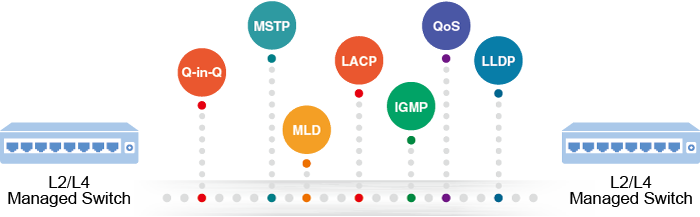
The XGS-6350-16X8Y4C can be programmed for basic switch management functions such as port speed configuration, port aggregation, VLAN, Spanning Tree Protocol, WRR, bandwidth control and IGMP snooping. It also supports 802.1Q tagged VLAN, Q-in-Q, voice VLAN and GVRP Protocol. In addition, the number of VLAN interfaces is 1K and the number of VLAN IDs is 4K. By supporting port aggregation, the XGS-6350-16X8Y4C allows the operation of a high-speed trunk combined with multiple ports. It enables up to 32 groups for trunk with a maximum of 8 ports for each group.
Efficient and Secure Management
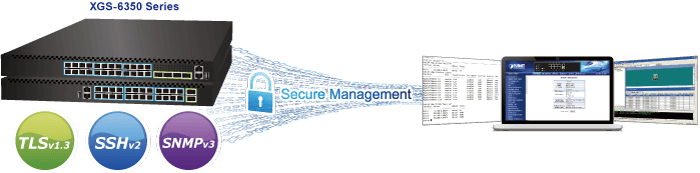
For efficient management, the XGS-6350-16X8Y4C Managed 100Gigabit Switch is equipped with console, Web and SNMP management interfaces.
- With its built-in Web-based management interface, the XGS-6350-16X8Y4C offers an easy-to-use, platform-independent management and configuration facility.
- The XGS-6350-16X8Y4C supports standard Simple Network Management Protocol (SNMP) and can be managed via any standard-based management software.
- For reducing product learning time, the XGS-6350-16X8Y4C offers Cisco-like command via Telnet or console port. Moreover, the XGS-6350-16X8Y4C offers secure remote management by supporting SSH connection which encrypts the packet content at each session.
Moreover, the XGS-6350-16X8Y4C offers secure remote management by supporting SSHv1/v2 and TLSv1.3 connection which encrypts the packet content at each session.
Centralized Hardware Stacking Management
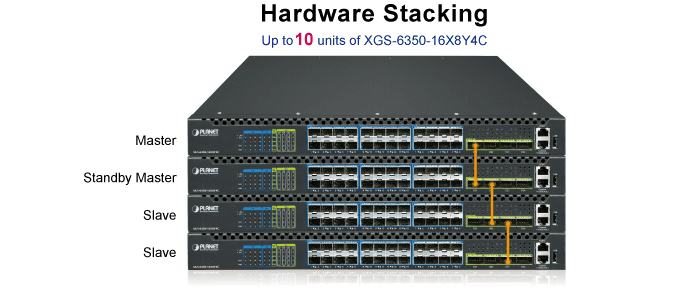
Up to 10 XGS-6350-16X8Y4C units can be stacked to operate as a single logical switch, simplifying network management and expansion. The ring-based stacking design provides redundancy so that data traffic continues even if one unit fails. The switches can also be hot-swapped without service interruption, greatly streamlining upgrades and scaling for increasing bandwidth demands.
Flexibility and Extension Solution
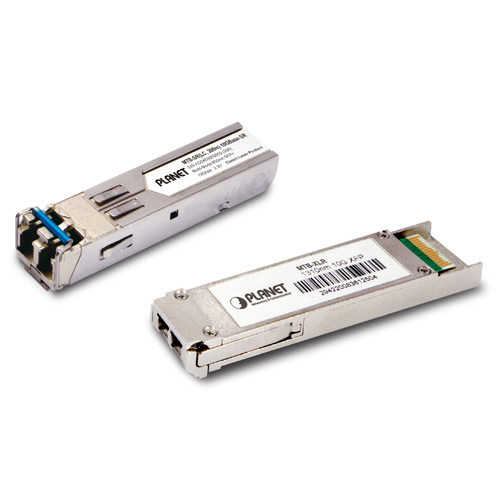
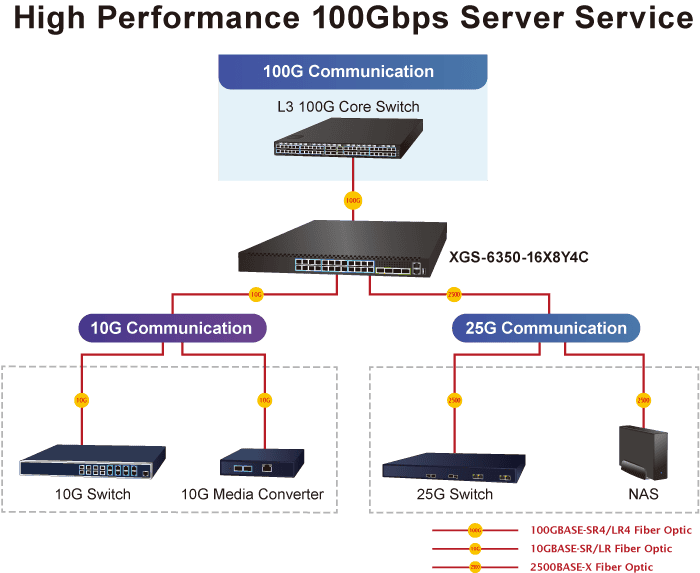
The XGS-6350-16X8Y4C provides 10Gbps SFP+ and 25G SFP28 and 100Gbps QSFP28 Fiber interfaces. Each of the SFP+ slots supports Dual Speed, 10GBASE-SR/LR or 1000BASE-SX/LX, each of the SFP28 slots supports 25G/10G/1G, and each of the QSFP28 slots supports native 100 Gigabit Ethernet, 40G and 4 x 10 Gigabit Ethernet modes. Therefore, the administrator can flexibly choose the suitable SFP transceiver according to not only the transmission distance, but also the transmission speed required.
The distance can be extended from 550 meters to 2km (multi-mode fiber) or up to 10/20/30/40/50/70/80 km (single-mode fiber or WDM fiber). They are well suited for applications within the enterprise data centers and distributions.
Redundant Ring, Fast Recovery for Critical Network Applications
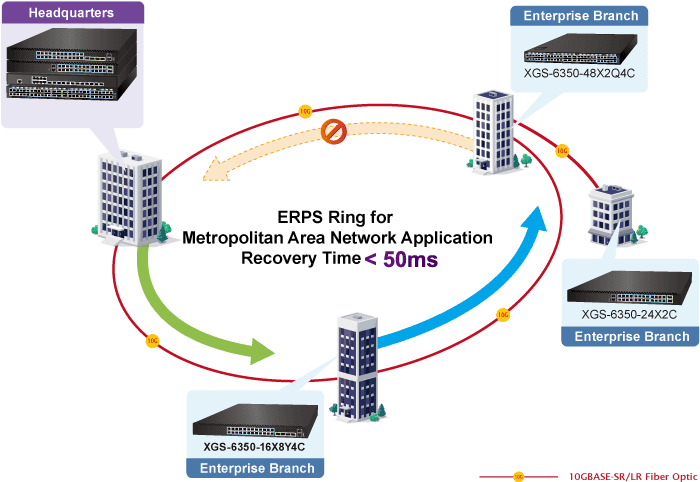
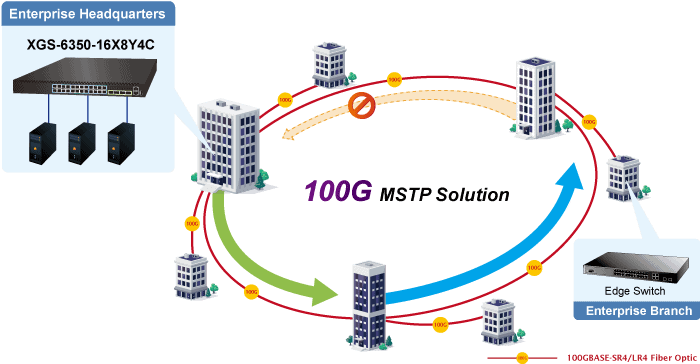
The XGS-6350-16X8Y4C supports redundant ring technology and features strong, rapid self-recovery capability to prevent interruptions and external intrusions. It incorporates advanced ITU-T G.8032 ERPS (Ethernet Ring Protection Switching) technology and Spanning Tree Protocol (802.1s MSTP) into customer’s network to enhance system reliability and uptime in harsh environments. In a certain simple Ring network, the recovery time could be less than 50ms to quickly bring the network back to normal operation.